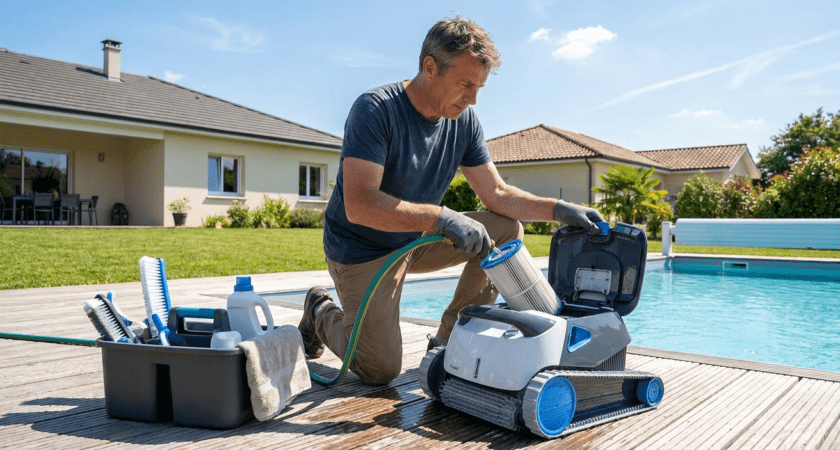
A robotic pool cleaner that receives basic maintenance after every use can last five to seven years. The same model, used identically but neglected between sessions, typically fails within two to three years. The difference is not the machine. It is the habits of the person using it.
The maintenance tasks that matter most are simple, take less than five minutes, and prevent the cascade of small problems that lead to major failures. Skipping them once causes no immediate damage. Skipping them consistently destroys the machine gradually.
After Every Use: Filter and Rinse
Remove the filter immediately after each cleaning cycle. Do not let it sit in the machine overnight. Debris that remains in a wet filter decomposes, creating a breeding ground for bacteria and mold that clog the filter mesh at a microscopic level. Rinsing removes visible debris. A weekly soak in filter cleaner removes the invisible residue that accumulates over time.
Rinse the filter with a garden hose, working from the inside out to push debris through the mesh rather than embedding it deeper. Hold the nozzle at a moderate pressure. High pressure can tear fine filter mesh, especially the two-micron cartridges that capture the smallest particles.
Leave the filter compartment open after rinsing so it dries completely before the next use. A closed, wet compartment traps moisture against the machine body, which degrades seals and creates the conditions for electrical corrosion at the cable connection point.
Weekly: Inspect the Drive System
Check the drive belts for cracks, glazing, or slack. Belts that appear shiny on the contact surface have glazed from heat and are no longer gripping the drive pulley effectively. This causes the wheels to slip, particularly on slopes and when the cleaner encounters resistance from a raised drain or fixture.
Glazed belts can be cleaned with isopropyl alcohol to temporarily restore grip, but replacement is the reliable solution. Belts are inexpensive and replacing them proactively before they break prevents the cleaner from getting stranded in the pool with a seized drive.
Check the wheel tracks for embedded debris. Small stones, twigs, and seed pods jam between the track and the wheel hub, creating resistance that stresses the drive motor. Remove debris with a small brush or pick. Tracks that are clean and flexible allow the motor to operate at its designed load.
Monthly: Cable Inspection
Examine the entire cable length for cuts, kinks, or exposed conductors. The most common damage points are where the cable exits the machine body and where it connects to the transformer. These are the stress points that flex every time the cleaner is deployed or retrieved.
Run your hand along the cable slowly, feeling for bulges or soft spots. Bulges indicate internal wire breaks where the insulation has expanded around a failed conductor. Soft spots indicate areas where the outer jacket has been compromised and water may be penetrating to the internal wiring.
Any cable damage that exposes internal wiring requires immediate replacement. Continuing to use a damaged cable risks electrical failure and, more importantly, creates a safety hazard. The low voltage design of robotic cleaners minimizes shock risk, but a damaged cable with exposed conductors can still cause problems.
Seasonally: Deep Clean the Machine Body
Scale and chemical residue accumulate on the machine body over the course of a season. Calcium deposits form on the intake vents and reduce water flow into the pump. Reduced water flow means reduced suction and reduced cooling for the pump motor. This is one of the most overlooked aspects of robotic pool cleaner maintenance, because the deposits build up gradually and the performance decline is not noticeable until suction has dropped significantly.
Soak the machine in a mild acid solution to dissolve calcium deposits. A mixture of one part muriatic acid to twenty parts water in a plastic container is sufficient. Submerge the lower half of the machine for fifteen minutes, then rinse thoroughly with fresh water. Wear gloves and eye protection.
Do not submerge the cable connection point or the transformer. The acid solution is only for the lower body and intake vents that are normally submerged during operation. This deep clean restores water flow and suction to near-original levels and should be done at the start and end of each swimming season.
End of Season: Proper Storage
If you close your pool for the winter, the robotic cleaner needs proper storage to survive the off-season in working condition. Clean the machine thoroughly, including the acid soak described above. Allow it to dry completely for at least forty-eight hours before storing.
Store the machine in a dry, temperature-stable location. Avoid unheated garages and sheds where temperatures drop below freezing. Residual water inside the pump housing can freeze and crack the impeller or the housing itself. A basement, utility room, or climate-controlled storage area is ideal.
Coil the cable loosely in large loops, not tight wraps. Tight wrapping creates kinks that stress the internal conductors. Store the cable separately from the machine body, draped over a hook or laid flat rather than wound around the transformer.
The Habits That Shorten Machine Life
Understanding what destroys pool robots is as important as knowing how to maintain them. The most common causes of premature failure all stem from neglect of basic maintenance routines.
- Leaving the filter in the machine between uses — clogs reduce suction and overheat the motor
- Storing the cleaner in direct sunlight — UV degrades the housing, seals, and cable jacket
- Running the cleaner with a partially clogged filter — the motor works harder and runs hotter
- Pulling the cleaner from the pool by the cable — stresses the cable connection and breaks internal wires
- Ignoring cable damage — water ingress at a damaged point corrodes connections and causes intermittent failures
None of these cause immediate failure. Each one degrades the machine slightly, and the cumulative effect over months or years is a machine that stops working long before its design life. Consistent maintenance is not about preventing a single catastrophic event. It is about preventing a thousand small degradations that add up to premature failure.
Five minutes after each use, a monthly belt check, and seasonal deep cleaning. That is the complete maintenance schedule that separates a cleaner that lasts five years from one that lasts two. The machine does not care about your intentions. It responds only to your habits.