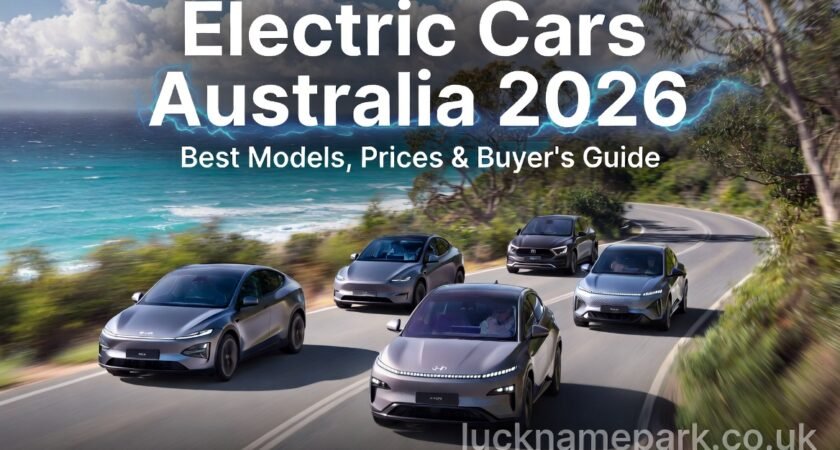
Have you noticed more quiet, sleek vehicles zipping around your neighborhood lately? You aren’t imagining it! The world of electric cars Australia is exploding right now. It feels like just yesterday that choosing an EV meant spending a fortune or settling for something that looked like a science experiment. But things have changed fast. In 2026, we are seeing a massive shift. High fuel prices and better technology have made Aussie drivers trade their petrol pumps for charging plugs in record numbers.
Whether you are a busy parent looking for a safe SUV or a city worker hunting for small electric cars Australia, there is finally something for everyone. Buying an EV isn’t just about saving the planet anymore; it’s about saving your hard-earned cash. With dozens of new models hitting our shores, the “range anxiety” of the past is fading away. Today, we’re diving deep into everything you need to know about the current market, from the best electric cars Australia to the latest electric cars Australia price trends.
Why 2026 is the Year to Buy an Electric Car
If you have been waiting on the sidelines, now might be the perfect time to jump in. The market for electric cars Australia reached a huge milestone this year, with EVs making up nearly 15% of all new car sales. Why the sudden rush? It’s a mix of better charging stations and cars that can actually travel long distances. We aren’t just talking about luxury brands anymore. Mainstream names are bringing out reliable, high-tech cars that fit a normal family budget.
I remember when people were worried they couldn’t drive from Sydney to Melbourne in an EV. Now, with ultra-fast chargers along the highways, you can grab a coffee and be ready to go in twenty minutes. Plus, the driving experience is just… better. They are quiet, they take off quickly at green lights, and you never have to smell petrol fumes again. It is a win-win for your wallet and your peace of mind.
Breaking Down the Electric Cars Australia Price
One of the biggest questions I get is: “Are they still too expensive?” The short answer is no! The electric cars Australia price has finally hit what experts call “price parity.” This means some electric models are now actually cheaper than their petrol-powered cousins. For the first time ever, we have multiple new cars starting under $30,000.
At the start of 2026, the BYD Atto 1 shook the market by launching at just $23,990 plus on-road costs. That is a game-changer! Even if you want something a bit bigger or with more “fruit” (features), most mid-range EVs now sit between $35,000 and $50,000. When you factor in that you’ll never pay for a $100 tank of fuel again, the math starts looking very attractive for the average Aussie household.
Finding the Best Electric Cars Australia
So, what are the best electric cars Australia has to offer right now? It really depends on what you need. If you want the “gold standard” for tech and charging, the Tesla Model Y and Model 3 are still incredibly popular. However, they have some serious competition this year. Brands like Kia, Hyundai, and BYD are winning awards for their build quality and long warranties.
For those who love a bit of luxury without the six-figure price tag, the new Kia EV6 facelift is a standout. It’s got a massive range and looks like it’s from the future. On the other hand, if you want value, the BYD Sealion 7 has become a massive hit. It offers plenty of room for the kids and all their sports gear. The “best” car is the one that fits your driveway and your lifestyle.
The Rise of Small Electric Cars Australia
Not everyone needs a massive SUV that takes up two parking spots. That is why small electric cars Australia are becoming the new favorites for city dwellers. These compact cars are perfect for squeezing into tight spots in Sydney or Melbourne. They are also much lighter, which means they use even less energy.
Models like the MG4 and the GWM Ora have proven that small doesn’t mean basic. They come packed with big screens, 360-degree cameras, and top-tier safety ratings. The new MG4 Urban is a particular favorite because it’s rear-wheel drive, making it surprisingly fun to zip around corners. If you are looking for a second car for the family or a stylish commuter, the small EV segment is where the real bargains are hiding.
Exploring Electric Cars Australia for Sale
When you start looking for electric cars Australia for sale, you’ll notice two paths: new and used. The new car market is flooded with fresh inventory, so you usually don’t have to wait months for delivery anymore. Most dealers now have stock ready to go. It’s a great time to be a buyer because brands are offering “drive-away” deals to beat their competitors.
The used market is also heating up! Because so many people bought EVs a few years ago, those cars are now hitting the second-hand market. You can find 3-year-old EVs for a fraction of their original price. Just make sure to check the battery health report before you buy. Most modern EV batteries are designed to last 10 to 20 years, so a used one can be a very smart investment.
Charging Infrastructure: Can You Travel?
A few years ago, owning an EV in Australia meant you were a bit of a pioneer. You had to plan every trip like a military operation. In 2026, the “Charging Revolution” is in full swing. We now have chargers at most major shopping centers, RSL clubs, and even small country towns. Government and private companies have teamed up to build “fast-charging highways” across the nation.
Most people do 90% of their charging at home overnight while they sleep. It’s like charging your phone—you plug it in at 9 PM, and it’s full by 7 AM. For those long road trips to see the relatives, the new generation of ultra-fast chargers can add 200km of range in about 15 minutes. That is just enough time for a bathroom break and a meat pie!
Maintenance and Long-Term Savings
One thing that surprises new owners is how little maintenance electric cars Australia actually need. Think about a petrol car: it has hundreds of moving parts, oils, filters, and belts that can snap. An electric motor is very simple. There are no oil changes, no spark plugs, and no exhaust systems to rust out.
Even your brakes last longer! EVs use “regenerative braking,” which uses the motor to slow the car down and put energy back into the battery. This means your brake pads hardly ever get used. Most owners find their service bills are about 50% cheaper than their old cars. Over five years, those savings really add up, making the total cost of ownership much lower than people expect.
Real-World Range: What to Expect
Let’s talk honestly about range. The “sticker” on the window might say 450km, but real life is different. If you are driving at 110km/h on the freeway against a strong wind, your battery will drain faster. However, in stop-and-go city traffic, EVs are incredibly efficient. Most modern electric cars Australia easily handle 300km to 400km on a single charge.
For the average Aussie who drives about 35km a day, you would only need to charge your car once every 10 days! Even if you live in the suburbs and commute to the city, the range is no longer a hurdle. My advice? Always look for the “WLTP” range rating—it’s the most realistic test standard used in Australia. It gives you a much better idea of what the car will actually do on the road.
Top 5 Tips for First-Time EV Buyers
Buying your first electric vehicle is exciting, but it can be a bit overwhelming. Here are my top tips to make sure you get the right deal:
- Test Drive Everything: Electric cars feel different. Some have very strong “one-pedal driving” while others feel more like a normal car.
- Check Your Home Power: Most people just need a standard power point, but a dedicated “Wallbox” charger is faster and worth the $1,000 investment.
- Look for Incentives: Some Australian states still offer stamp duty discounts or registration rebates for EVs.
- Download the Apps: Get apps like PlugShare or Chargefox. They show you every charger in Australia and if they are currently working.
- Don’t Overbuy Range: If you only drive long distances twice a year, don’t pay $20,000 extra for a massive battery you don’t need daily.
The Future of Transport in Australia
The shift toward electric cars Australia isn’t just a trend; it is the future. We are seeing electric utes like the Toyota HiLux BEV and the KGM Musso EV finally arriving for our tradies. Even our heavy trucks and buses are going electric. This means our cities will become quieter and the air will be cleaner for our kids.
Australia is also a sun-drenched country. Many owners are now using their rooftop solar panels to charge their cars for free. Imagine never paying for “fuel” again because the sun is doing the work! This “Solar-to-EV” connection is making Australia one of the best places in the world to own an electric vehicle. The technology is only getting better, and the prices are only going down.
Conclusion
Choosing to switch to an electric vehicle is a big step, but in 2026, it is a very logical one. With a huge variety of electric cars Australia now available, from tiny city hatches to big family haulers, the choice is yours. You’ll save money on service, say goodbye to petrol stations, and enjoy a smoother, more powerful drive.
If you are ready to make the move, start by visiting a few local dealerships and taking a test drive. The “electric grin” you get when you first floor an EV is real! Don’t forget to check out the latest electric cars Australia for sale online to compare prices and find the best deals in your state. The future is electric—are you coming along for the ride?
FAQs
1. What is the cheapest electric car in Australia right now?
As of early 2026, the BYD Atto 1 is the most affordable new EV, starting from approximately $23,990 plus on-road costs. Other budget-friendly options include the MG4 Urban and the GWM Ora.
2. How long does it take to charge an electric car at home?
Using a standard 3-pin wall plug, it can take 12–24 hours to go from empty to full. However, most owners install a 7kW home charger, which can fully charge most cars in about 6–10 hours (usually overnight).
3. Do EV batteries really die after a few years?
No, that is a common myth. Most modern EV batteries are designed to last between 300,000km and 500,000km. Most manufacturers in Australia offer an 8-year or 160,000km warranty specifically for the battery.
4. Can I tow a trailer with an electric car?
Yes! Many newer models like the Kia EV9, Tesla Model Y, and even the BYD Atto 3 have official tow ratings. Just keep in mind that towing a heavy load will reduce your driving range by about 30–50%.
5. Are there enough charging stations for a road trip?
Yes, the network has grown significantly. Major highways like the Pacific Highway and the Hume Highway have “superchargers” every 100km or so. You can use apps like PlugShare to find them easily.
6. What happens if I run out of battery on the road?
It is just like running out of petrol. You would need to call a roadside assistance service (like NRMA or RACV). Some service trucks now carry mobile chargers to give you a “splash” of power to reach the next station.
References:
- NRMA – Cheapest Electric Cars in Australia 2026
- RACV – Electric Vehicle Market Trends and Pricing
- Zecar – 2026 EV Sales and Comparison Data
- The Driven – Australia’s EV Charging Infrastructure Update 2026