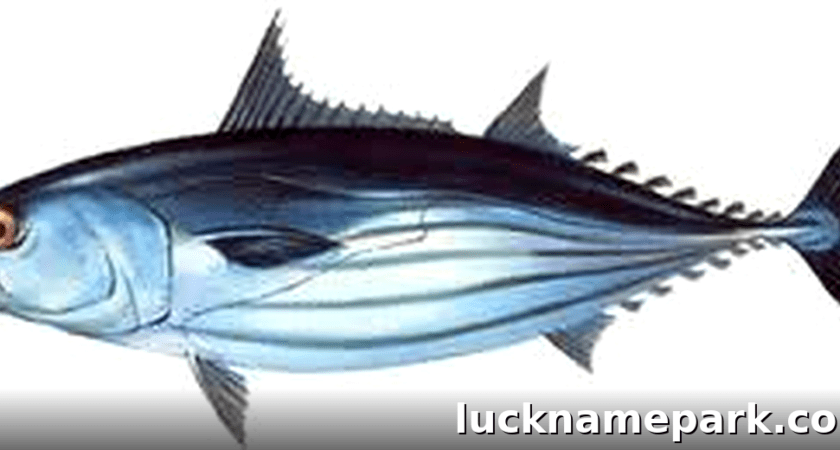
Have you ever opened a can of tuna and wondered what kind of fish is inside? Chances are, it’s the skipjack tuna. Known scientifically as Euthynnus pelamis, this fish is the most popular choice for canned tuna around the world . They are small, fast, and full of energy. These fish are also known by many other names, like Katsuwonus pelamis, which is actually its current scientific name . For simplicity, people often just call them “skipjack” or “striped tuna” because of the dark lines on their bellies .
These fish live in warm tropical oceans across the globe . They are incredible swimmers and travel in large groups, or schools, looking for food. Because they are so abundant, they are a major part of the seafood industry. In this guide, we will explore everything about Euthynnus pelamis. We will look at where they live, what they eat, and why they are so important to humans.
We will also dive into the details that make the skipjack tuna unique. From their biology to their conservation status, this is your complete resource. So, let’s dive in and learn about this fascinating fish that might just be in your pantry right now.
What is Euthynnus pelamis?
Euthynnus pelamis, better known as the skipjack tuna, is a member of the mackerel family, Scombridae . Its body is shaped like a torpedo. This shape helps it swim very fast through the water. They are the smallest and most common of the major commercial tuna species . A fully grown adult is usually about 3 feet long and weighs around 40 pounds .
The name “skipjack” comes from their habit of skipping along the surface of the water. They also have a unique look that helps you spot them. Their backs are a dark purplish-blue. But the most distinctive feature is on their lower sides. Here, they have four to six dark, horizontal stripes .
These stripes stand out against their silver bellies. This is why they are often called “striped tuna” . While the scientific name is frequently used in academic settings, in the fishing and canning industry, it is known as one of the most important fish in the sea. Furthermore, they have a specialized circulatory system that keeps them warmer than the surrounding water, making them partially warm-blooded .
Habitat and Distribution
One of the most interesting things about Euthynnus pelamis is that it is a true global traveler. You can find skipjack tuna in all the world’s major oceans. They prefer tropical and warm temperate waters . The highest numbers are found near the equator . However, they are not usually found in the Mediterranean Sea .
Skipjack are an epipelagic fish. This means they live in the top layer of the open ocean. During the day, they may dive to depths of up to 850 feet . But at night, they stay closer to the surface. They love warm waters with temperatures between 58 and 86°F .
These fish are highly migratory. They travel long distances to find food and to spawn. They are also a schooling fish. They often gather around floating objects like logs or even whales . These objects act as meeting places in the vast open ocean. Schools can be massive, sometimes containing tens of thousands of fish. They also like to mix with other species, such as juvenile yellowfin and bigeye tuna .
Physical Appearance and Identification
Identifying Euthynnus pelamis is fairly easy thanks to its striking features. The body is mostly without scales, except for a small area near the head called the corselet . Its streamlined, torpedo-shaped body is built for speed .
The top of the fish is a dark blue or purple color. This fades to a silvery white on the belly. The most recognizable feature, however, are the dark stripes. They run horizontally along the lower half of their body . These stripes are a key difference that separates skipjack from other tuna species .
They also have other physical traits that aid in their fast swimming. They possess small finlets behind their dorsal and anal fins . These help reduce water resistance when swimming. Their tail is deeply forked, and the tail base has three sets of ridges, or “keels.” This design allows the fish to maintain stability at high speeds. They also have a single row of small, cone-shaped teeth .
Biology and Life Cycle
The skipjack tuna is a fast-growing fish. This is a key reason why its population remains so large . They can live up to 8 or 10 years . They are also very fast swimmers. They need to be, because they must keep swimming to breathe. This is because they do not have the ability to pump water over their gills efficiently while still .
Skipjack can reproduce, or spawn, all year round in warm equatorial waters . In cooler areas, spawning is limited to the warmer months. They spawn through a process called broadcast spawning. This is where females and males release their eggs and sperm directly into the water at the same time .
A single female can lay between 100,000 and 2 million eggs per year . These eggs hatch in about a day. They are opportunistic feeders. This means they will eat a wide variety of food. Their diet mainly consists of small fish like anchovies and herring, as well as crustaceans and squids .
The Diet of the Skipjack Tuna
Euthynnus pelamis are active predators . They rely on their speed to catch their prey. Because they cannot suction feed, they must chase and bite their food. They are opportunistic feeders, meaning they aren’t very picky . This helps them thrive in the ocean.
Their diet includes a wide range of marine life. Small schooling fish are their primary food source. Examples include herring, anchovies, and sardines . They also eat a lot of invertebrates. This includes crustaceans like krill and shrimp. Squid and other mollusks are also a favorite meal.
Foraging typically peaks during dawn and dusk . They often feed near areas where cold and warm water mix. These are called convergence zones. These areas are rich in nutrients and attract the small fish that skipjack eat. Interestingly, large skipjack tuna (over 8 inches) often hunt alone, while smaller ones school together while feeding.
Predators and Threats
While Euthynnus pelamis is an important predator, it is also a key part of the ocean food chain. They are preyed upon by many larger animals . Large sharks, billfish (like marlin), and other big tuna species are their main natural predators. Seabirds also catch them from the surface .
Cannibalism is also common. This means skipjack tuna will sometimes eat smaller members of their own species. But the most significant threats to skipjack are human-related. The main threat is fishing. They are the most heavily fished tuna in the world . Bycatch is also a problem. Sometimes, fishers catch other species by accident.
This includes juvenile yellowfin and bigeye tuna, which often school with skipjack. There is also a risk of catching sharks, sea turtles, and other marine life . This is why sustainable fishing practices are so important to protect the rest of the ocean environment.
Euthynnus pelamis and Human Consumption
Skipjack tuna is the main species used for canned “light” tuna . It is easily the most popular tuna in the global market. This is because their populations are currently strong. They are also very tasty. They have a firm, moist texture and a distinct, rich flavor .
For many, canned skipjack is a household staple. It is affordable and versatile. It is used in sandwiches, salads, and casseroles. In Japan, it is known as “katsuo.” It is often eaten raw, or used to make a dried, smoked product called “katsuobushi” . This is a key ingredient in making dashi, a fundamental Japanese soup stock.
The fish is also sold as fresh or frozen steaks. However, the canned product is by far the most common way it is enjoyed around the world . It is an accessible source of protein. In 2020, the US contributed less than one percent of the total western Atlantic skipjack landings . Much of the US commercial harvest actually comes from the Pacific.
Nutritional Profile and Health Benefits
For those seeking a healthy diet, Euthynnus pelamis is an excellent choice. It is a powerhouse of nutrition. It is an excellent source of low-fat protein. A 100-gram serving provides about 22 grams of protein . This helps build and repair muscles.
It is also packed with essential vitamins and minerals. It is especially high in B vitamins. This includes B3 (Niacin) and B6, which support energy levels and brain health. It is also rich in selenium and phosphorus . These nutrients are important for a healthy immune system and strong bones.
Furthermore, skipjack is a great source of healthy fats. It contains Omega-3 fatty acids like DHA and EPA . These fats are great for your heart and brain. With only about 100-130 calories per 100 grams, it is very nutrient-dense. This means you get a lot of nutritional bang for your buck. It also contains no carbohydrates, making it suitable for low-carb diets.
Sustainability and Conservation
One of the biggest questions surrounding any seafood is whether it is sustainable. The good news is that skipjack tuna populations are considered healthy . They are not currently listed as threatened or endangered . The fish is fast-growing and reproduces at a young age, which helps it avoid extinction.
However, they are not immune to risks. The skipjack tuna could easily slip into a vulnerable state due to overfishing if it is not properly managed . In the Atlantic, for example, the stock is not overfished . This is because NOAA Fisheries and international bodies work together to manage the fishery .
But there are still concerns. The use of Fish Aggregating Devices (FADs) can lead to high amounts of bycatch . In the US, the use of handgear (like rods and reels) is very selective and has minimal bycatch . It is always a good idea to look for the “dolphin-safe” label. Also, look for the MSC (Marine Stewardship Council) certification when buying canned tuna .
How to Enjoy Skipjack Tuna
There are many ways to enjoy Euthynnus pelamis. Its firm flesh holds up well to different cooking methods. Here are a few popular ways to eat it.
- Canned: This is the most common form. It is great for a quick lunch. You can mix it with mayonnaise for a classic tuna salad. You can also add it to pasta, casseroles, or top it on a green salad. Canned skipjack can be packed in water or oil.
- Fresh or Frozen Steaks: Skipjack can be grilled, broiled, or pan-seared. This is a great option for a simple, healthy dinner. The meat is firm, so it holds up well on the grill. Just season it with salt, pepper, and a little lemon juice.
- Katsuobushi (Bonito Flakes): This is a processed form of skipjack. It is dried, smoked, and shaved into thin flakes. It is used to make dashi broth in Japanese cooking . You can also use it as a savory topping for rice or tofu.
FAQs about Euthynnus pelamis
What is the difference between Euthynnus pelamisand Katsuwonus pelamis?
They are the same fish! Euthynnus pelamis is an older scientific name. Katsuwonus pelamis is the current, accepted scientific name .
Is skipjack tuna the same as “light tuna”?
Yes, almost all canned “light tuna” is made from skipjack tuna . It is the most common species used for canning.
Is skipjack tuna safe to eat?
Yes. It is a very healthy source of protein and nutrients. However, like all tuna, it has some mercury. It is best to eat it in moderation, especially for pregnant women and children.
What do skipjack tuna eat?
They are opportunistic feeders. They eat small fish like anchovies and sardines . They also eat crustaceans, squids, and shrimp.
How big can skipjack tuna get?
They can grow up to about 3 feet long and weigh up to 40 pounds . The record length is 43 inches, and the record weight is 76 pounds . The average catch is usually around 7-22 pounds .
Why are they called “skipjack”?
They are named for their habit of “skipping” along the surface of the water when they are being chased or when they are excited.
Conclusion
The Euthynnus pelamis, or skipjack tuna, is a true marvel of the ocean. It is a fast, fascinating fish that plays a huge role in the marine ecosystem and the global economy. From its torpedo-shaped body built for speed to its distinctive dark stripes, it is a fish that is easy to recognize.
Its abundance and nutritional profile make it a kitchen staple for millions of families. It is a versatile source of protein that is both affordable and healthy. While its populations are currently stable, it serves as a reminder of the importance of sustainable fishing. By choosing seafood that is managed well, we ensure that this wonderful fish remains in our oceans and on our plates for generations to come.